For US healthcare professionals

PHOSPHARE-IDA trials: Significantly lower incidence of hypophosphatemia with Monoferric vs FCM
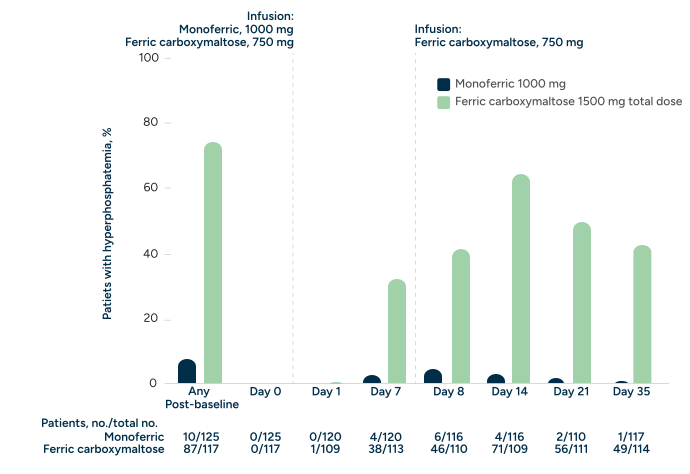
Two identical, randomized (1:1) open-label comparative trials in 245 patients with IDA and intolerance or unresponsiveness to oral iron. Monoferric was administered as a single dose of 1000 mg infused over 20 minutes on Day 0. Ferric carboxymaltose (FCM) was administered at 750 mg on Day 0 and 750 mg on Day 7.5 See full study design below.
Pooled incidence of hypophosphatemia (<2.0 mg/dL) in the PHOSPHARE-IDA trials (primary endpoint)5
PHOSPHARE-IDA
Monoferric vs FCM evaluated at 30 US sites5
Two identical, randomized open-label clinical trials in 245 patients with IDA and intolerance or unresponsiveness to oral iron.5
245 adult patients with IDA
Trial A: 123 patients with IDA
Trial B: 122 patients with IDA
Selected inclusion criteria
- Age ≥18 years
- Hb ≤11 g/dL
- s-ferritin <100 ng/mL
- A history of intolerance or unresponsiveness to 1 month or more of oral iron
Selected baseline demographics
Trial A: mean age, 45.1 years; 95.9% women
Trial B: mean age, 42.6 years; 94.1% women
Selected exclusion criteria
- Patients with reduced kidney function
Randomized 1:1
117 in the pooled FCM group
Trial A: 60
Trial B: 57
- 750 mg per dose on day 0 and day 7
- 2 doses (1500 mg total)
125 in the pooled Monoferric group
Trial A: 63
Trial B: 62
- One 1000-mg dose at day 0
- IV infusion over at least 20 minutes
Co-primary endpoints1
- Incidence of hypophosphatemia (serum phosphate level <2.0 mg/dL) between baseline and day 35
FCM=ferric carboxymaltose; IDA=iron deficiency anemia; IV=intravenous; s-ferritin=serum ferritin.
Percentage of patients with hypophosphatemia from baseline to day 35: Pooled data: 8.0% with Monoferric vs 74.4% with FCM (adjusted rate difference, -68.3% [95% CI: -76.5% to -56.5%])1
Post hoc analysis: Pooled incidence of severe hypophosphatemia (≤1.0 mg/dL)5
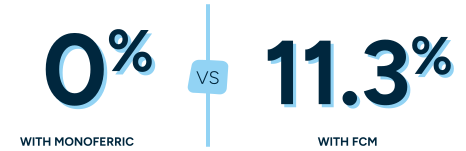

A serum phosphate level ≤1 mg/dL constitutes severe hypophosphatemia and requires urgent medical attention. This condition may result in respiratory failure, cardiac dysfunction, neurologic complications, and muscle weakness; hospitalization and IV phosphate replacement are advised.6
Study limitations: The two trials enrolled mostly women with IDA due to gynecologic bleeding, who tend to have higher rates of hypophosphatemia. This likely explains the higher than anticipated incidence of hypophosphatemia following FCM treatment. Trials did not measure clinical outcome.

 Previous

FCM=ferric carboxymaltose; IDA=iron deficiency anemia.
| a | The PHOSPHARE-IDA clinical trials compared the incidence of hypophosphatemia with Monoferric vs that with FCM. Efficacy and anemia outcomes were not evaluated. Repeat the dose of Monoferric if IDA reoccurs. |
References: 1. Monoferric (ferric derisomaltose) Prescribing Information; Pharmacosmos Therapeutics Inc., Morristown, NJ: 2022. 2. Data on file. Pharmacosmos Therapeutics Inc. 3. Auerbach M, Henry D, Derman RJ, Achebe MM, Thomsen LL, Glaspy J. Am J Hematol. 2019;94(9):1007-1014. 4. Bhandari S, Kalra PA, Berkowitz M, Belo D, Thomsen LL, Wolf M. Nephrol Dial Transplant. 2021;36(1):111-120. 5. Wolf M, Rubin J, Achebe M, et al. JAMA. 2020;323(5):432-443. 6. Kaur J, Castro D. Hypophosphatemia. In: StatPearls [Internet]. Treasure Island (FL): StatPearls Publishing; 2025. Accessed March 5, 2026. https://www.ncbi.nlm.nih.gov/books/NBK493172/ 7. Zoller H, Wolf M, Blumenstein I, et al. Gut. 2023;72(4):644-653. 8. Ozer NT, Can Sezgin G, Sahin Ergul S, et al. J Gastrointestin Liver Dis. 33(3):323-329.
