For US healthcare professionals

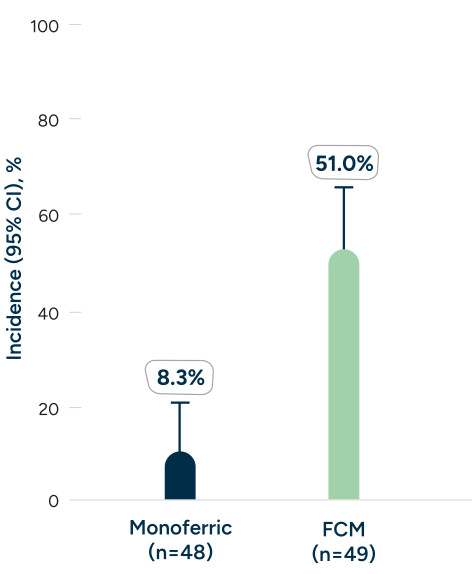
PHOSPHARE-IBD trial: Significantly lower incidence of hypophosphatemia with Monoferric vs FCM from baseline to day 35
Randomized double-blind clinical study in 97 adults with IBD and IDA. Patients were administered 1000 mg of Monoferric or ferric carboxymaltose (FCM) on Day 0. Then at day 35, patients received either 1000 mg or 500 mg of Monoferric or 1000 mg or 500 mg of FCM, per the EMA label for both products.7 See full study design below.
Incidence of hypophosphatemia (<2.0 mg/dL) with Monoferric vs FCM from baseline to day 35 (primary endpoint)7
| a | Monoferric US dosing for patients ≥50 kg is 1000 mg, which may be repeated if IDA reoccurs. |
-42.8 %
Adjusted risk difference, Monoferric vs FCM
(95% CI: -57.1% to -24.6%) P<0.0001
This additional trial was conducted to further evaluate the incidence of hypophosphatemia in a specific subset of patients with IBD who are particularly vulnerable and more likely to experience low phosphate levels.8
The PHOSPHARE-IBD study evaluated patients through day 70; however, data are only presented through day 35, as is consistent with the FDA-approved dosage in the US. For additional information on data beyond day 35, please contact Medical Information at 888-828-0655 or MEDINFO@PHARMACOSMOS.US.
PHOSPHARE-IBD
Monoferric vs FCM evaluated at 20 EU sites7
Randomized double-blind clinical study in 97 adults with IBD and IDA. Patients were administered 1000 mg of Monoferric or FCM on day 0. Then at day 35, patients received either 1000 mg or 500 mg of Monoferric or 1000 mg or 500 mg of FCM, per the EMA label for both products.a

| a | Monoferric US dosing for patients ≥50 kg is 1000 mg, which may be repeated if IDA reoccurs. |
| b | Based on weight and iron need at screening. |
97 adult patients with IBD and IDA
Primary endpoint
- Incidence of hypophosphatemia (serum phosphate <2.0 mg/dL) from baseline to day 35
Selected additional endpoints
- Change in Hb concentrations from baseline to day 70
- Change in FACIT–Fatigue Scale score from baseline to day 70
- Change in biomarkers of bone and mineral metabolism from baseline to day 70
- Incidence of adverse events and serious adverse events at any time during the study
EMA=European Medicines Agency; FACIT=Functional Assessment of Chronic Illness Therapy; FCM=ferric carboxymaltose; FDA=US Food and Drug Administration; IBD=inflammatory bowel disease; IDA=iron deficiency anemia.
The PHOSPHARE-IBD study evaluated patients through day 70; however, data are only presented through day 35, as is consistent with the FDA-approved dosage in the US. For additional information on data beyond day 35, please contact Medical Information at 888-828-0655 or MEDINFO@PHARMACOSMOS.US.
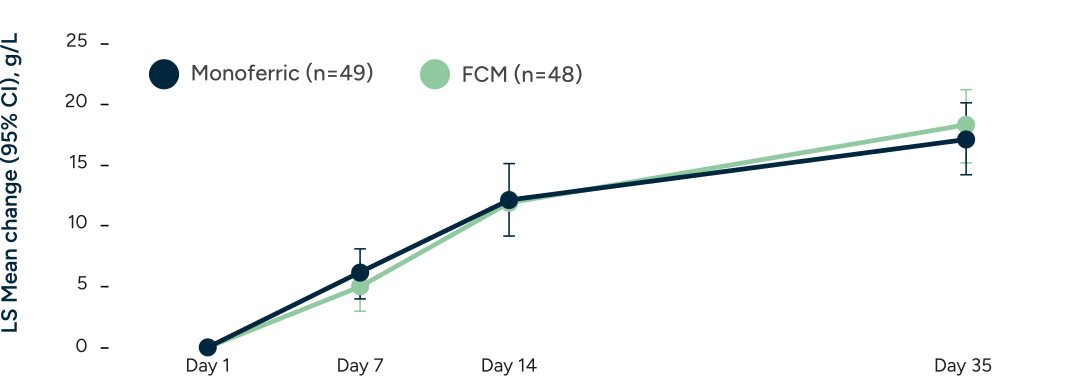
Hemoglobin change, FACIT-Fatigue scores, and phosphate levels (additional endpoints are not powered for superiority)7,b,c
Change in Hb baseline to day 35
Change in FACIT-Fatigue Scale score from baseline to day 35
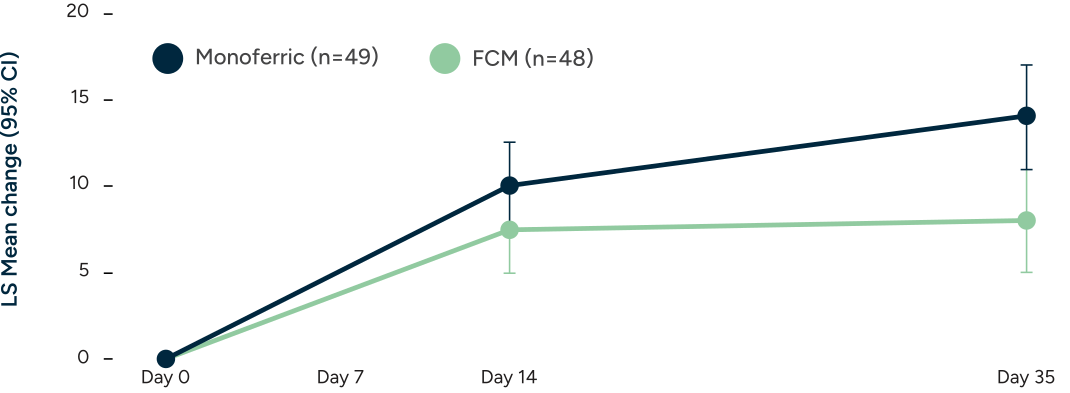
Change in S-phosphate from baseline to day 35
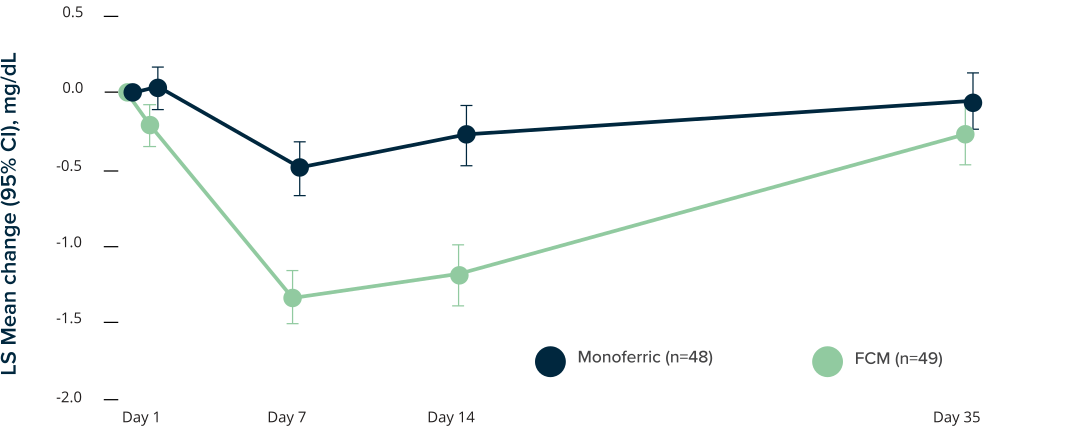
| b | The PHOSPHARE-IBD study evaluated patients through Day 70; however, data are only presented through Day 35, as is consistent with US labeling. |
| c | FACIT-Fatigue and Hb change graphs use the ITT population while S-phosphate uses the safety analysis set. |
Overall, AEs and SAEs occurred with comparable frequency in the Monoferric and FCM groups. Hypophosphatemia and vitamin D deficiency were reported as an AE more often in the FCM group than in the Monoferric group. Headache and nausea were reported as an AE more often in the Monoferric group than in the FCM group.
AEs (≥10%) and SAEs
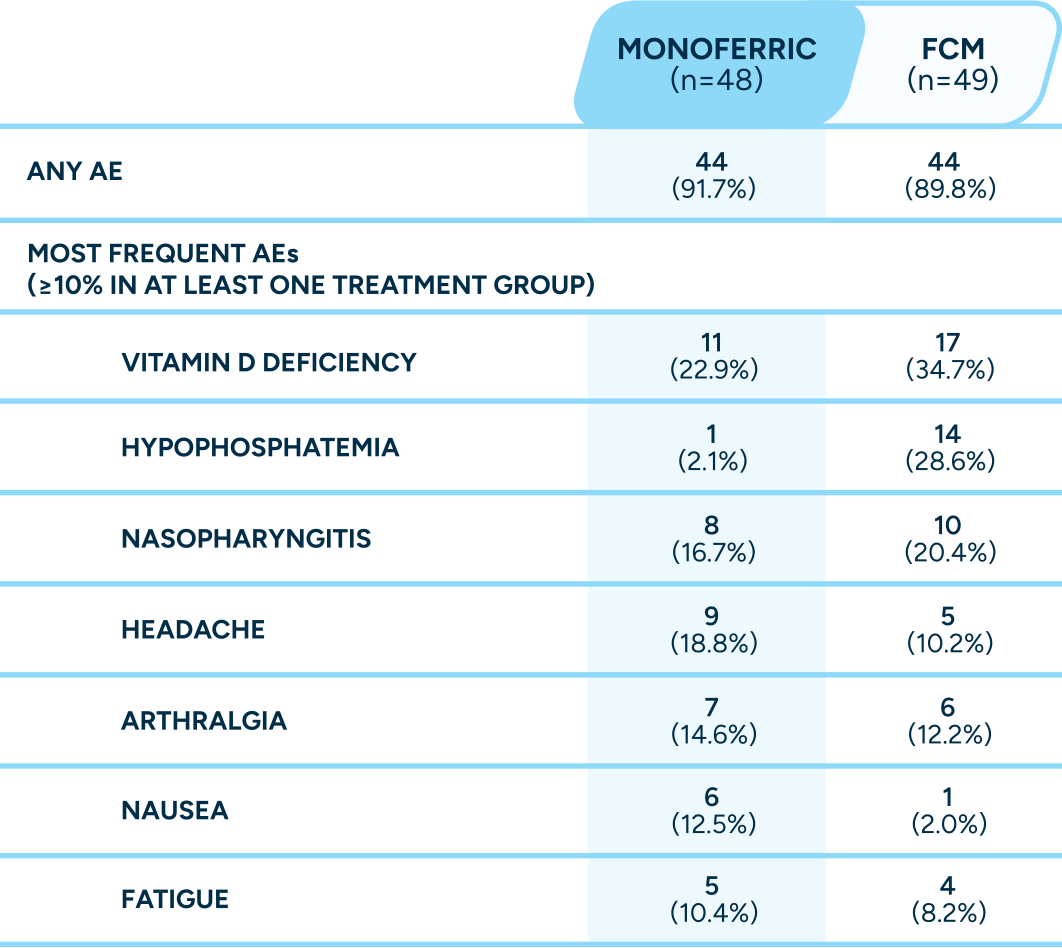
AE=adverse event; EMA=European Medicines Agency; FACIT=Functional Assessment of Chronic Illness Therapy; FCM=ferric carboxymaltose; FDA=US Food and Drug Administration; IBD=inflammatory bowel disease; IDA=iron deficiency anemia; ITT=intention to treat; SAE=serious adverse event.
 Previous

References: 1. Monoferric (ferric derisomaltose) Prescribing Information; Pharmacosmos Therapeutics Inc., Morristown, NJ: 2022. 2. Data on file. Pharmacosmos Therapeutics Inc. 3. Auerbach M, Henry D, Derman RJ, Achebe MM, Thomsen LL, Glaspy J. Am J Hematol. 2019;94(9):1007-1014. 4. Bhandari S, Kalra PA, Berkowitz M, Belo D, Thomsen LL, Wolf M. Nephrol Dial Transplant. 2021;36(1):111-120. 5. Wolf M, Rubin J, Achebe M, et al. JAMA. 2020;323(5):432-443. 6. Kaur J, Castro D. Hypophosphatemia. In: StatPearls [Internet]. Treasure Island (FL): StatPearls Publishing; 2025. Accessed March 5, 2026. https://www.ncbi.nlm.nih.gov/books/NBK493172/ 7. Zoller H, Wolf M, Blumenstein I, et al. Gut. 2023;72(4):644-653. 8. Ozer NT, Can Sezgin G, Sahin Ergul S, et al. J Gastrointestin Liver Dis. 33(3):323-329.
