
A high-dose IV iron used by patients across the globe for over 10 years
Monoferric is FDA approved to replace up to 1000 mg of iron in a single, rapid infusion*
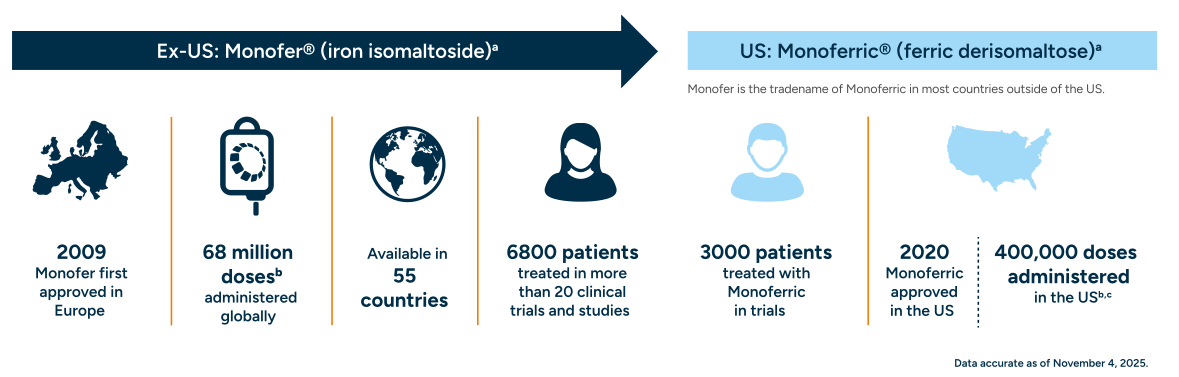
Monoferric was introduced over 10 years ago as Monofer in the EU. Over 68 million dosesb have been administered outside of the US since launch, and it is available in more than 55 countries.
| * | Product labeling and characteristics may differ in other countries. |
| a | Ferric derisomaltose is also known as iron isomaltoside 1000. Iron isomaltoside 1000 was the generic name initially approved in the European Union, whereas ferric derisomaltose is the international nonproprietary name and United States Adopted Name. |
| b | As per the defined daily dose (DDD) definition by the World Health Organization (WHO). Outside the US, Monoferric is measured in 100-mg doses, as it is dosed per body weight. Within the US, Monoferric is measured in 1000-mg vials. |
| c | 396,587 doses LTD through Nov 2025. Over 400k doses as of Dec 2025. |
What to expect with Monoferric
Monoferric is used for treating iron deficiency anemia when you have previously tried oral iron medications and they have not worked. Monoferric is an intravenous iron treatment, meaning it is administered through your vein from a drip.
The nurse will stay with you during Monoferric treatment and for at least 30 minutes after to make sure you don’t have any type of reaction.
Benefits of Monoferric
Monoferric provides a slow release of iron into your system. The iron is used to create red blood cells, which will help to deliver oxygen throughout your body.
You also have access to the Monoferric Patient Solutions® Program that delivers diverse support to address your treatment needs. Check out the patient brochure to see everything the Monoferric Patient Solutions Program has to offer.
About the procedure
An infusion can take as little as 20 minutes. After the infusion, your doctor or a nurse will stay with you for 30 minutes to make sure you are feeling well before you leave.
Support
Your doctor can provide answers specific to your questions. If you have additional questions, Monoferric Patient Solutions Program is here for you before, during, or after treatment. Please give us a call if you have any questions. Just call the Monoferric Patient Solutions Program at 1-800-992-9022.
After treatment
In the weeks or months after treatment, a new blood sample will usually be taken to check your iron levels. By doing this, your doctor will be able to determine if you need more treatment.
Some patients need more than one treatment. If you have a long-lasting condition that is causing your iron deficiency anemia, it is normal to have your treatment repeated.
 Download the Monoferric Patient Solutions Enrollment Form and complete with your doctor
